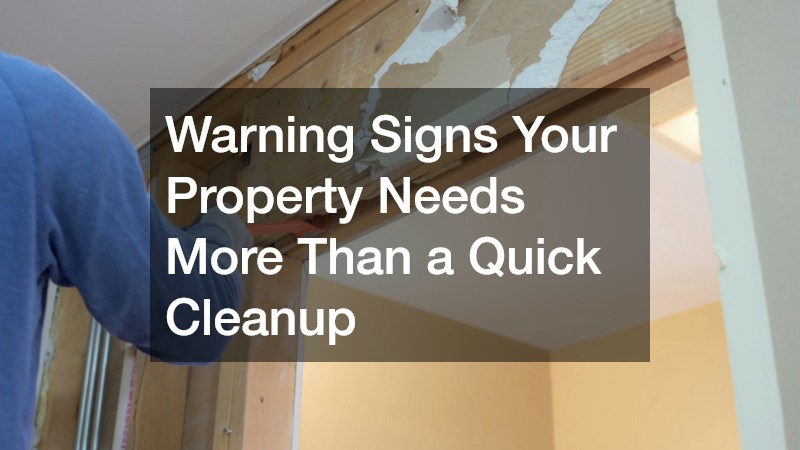
A messy yard or a dated-looking exterior can often be fixed with a weekend of hard work and a few basic tools. But sometimes what looks like a simple cleanup project is actually a symptom of something bigger happening beneath the surface, behind the walls, or underground. Learning to tell the difference can save you thousands of dollars and prevent small issues from becoming major structural or safety problems. This article walks through the warning signs that suggest your property needs more than a quick tidy-up, and when it’s time to call in a professional for a closer look.
Overgrown Landscaping That Hides Structural Damage
A yard that has gone wild for a season or two can usually be tamed with pruning shears and a few trash bags. But when vegetation has been left unchecked for years, it can mask serious problems like cracked foundations, rotting fence posts, or drainage channels that have collapsed. Vines growing directly on siding or brick can trap moisture against the exterior, leading to mold growth and material breakdown that isn’t visible until the plants are cleared away. If you’re planning to refresh your beds, replacing old mulch with fresh bark dust can also help you spot soil erosion or pooling water around your foundation that was previously hidden.
Once the greenery is cut back, take a slow walk around the entire perimeter of your home. Look closely at siding, foundation walls, and any exposed wood for signs of damage that landscaping may have been concealing for a long time.
- Cracks in the foundation wider than a quarter inch
- Soft or spongy wood around window and door frames
- Visible mold, mildew, or algae staining on exterior walls
- Standing water or muddy low spots near the house
- Pest trails or nesting evidence in dense shrubbery
Roof Stains, Sagging, and Missing Material

A few missing shingles after a windstorm might just need a patch job, but widespread granule loss, sagging rooflines, or dark streaking across large sections of the roof often point to a system nearing the end of its life. Shingle roofing typically lasts between 20 and 30 years depending on material quality and climate exposure, and once it starts failing, water can work its way into the attic and framing long before you notice a leak indoors. Sagging is a particularly serious sign, since it usually means the decking underneath has absorbed moisture and lost structural integrity. Waiting too long to address these signs almost always turns a repair into a full replacement.
If you notice any of the issues below, it’s worth scheduling a professional inspection rather than assuming a simple patch will solve the problem.
- Curling, cracking, or missing shingles in multiple areas
- Dark streaks or moss patches covering large roof sections
- Visible sagging along the roofline or near valleys
- Daylight visible through the attic boards
- Granules collecting in gutters or at the base of downspouts
Musty Odors and Persistent Moisture Indoors
A musty smell after a heavy rain isn’t always cause for alarm, but if the odor lingers for days or keeps returning no matter how much you clean, it’s usually a sign of trapped moisture somewhere in the structure. This can come from a slow plumbing leak, poor ventilation, or grading issues outside that push water toward the foundation instead of away from it. A neglected HVAC system can also contribute to the problem, since a clogged condensate line or failing unit struggles to control humidity, and calling in AC repair may be just as important as addressing the moisture itself. Mold can grow inside wall cavities and under flooring without ever becoming visible, which makes odor one of the most reliable early warning signs homeowners tend to overlook. If the smell is concentrated in a bathroom, basement, or laundry room, that location often points directly to the source.
Ignoring persistent moisture rarely makes it go away on its own, and the damage tends to spread quietly while you wait. A professional moisture assessment can identify whether the fix is as simple as improving ventilation or as involved as regrading your yard.
Warm or Cold Spots That Signal HVAC Trouble

If certain rooms in your house never seem to reach a comfortable temperature no matter how you adjust the thermostat, your system may be struggling with more than just a dirty filter. Uneven airflow can point to duct damage, a failing compressor, or a unit that was undersized for your home to begin with. Rising energy bills paired with inconsistent comfort are classic signs that a system is working harder than it should to keep up. In many cases, a same-day fix isn’t enough and you’ll need a more thorough diagnostic visit.
When these symptoms show up together, it’s a strong signal to call an AC repair company for a full system evaluation rather than continuing to patch small issues one at a time.
- Rooms that stay noticeably warmer or colder than the rest of the house
- Strange noises like grinding, clicking, or hissing from the unit
- A sudden spike in monthly energy costs
- Frequent cycling on and off
- Weak airflow from vents even after filter changes
Slow Drains and Soggy Patches in the Yard
A single slow drain is often just a clog, but multiple slow drains throughout the house happening at the same time usually points to a problem further down the line. Gurgling toilets, sewage odors near the yard, or unusually green and lush patches of grass in one specific area can all indicate a septic system that isn’t functioning properly. These issues tend to get worse gradually, which makes them easy to dismiss until the problem becomes a full backup inside the home. Scheduling septic inspections at the first sign of trouble can catch a failing drain field or a cracked tank before it turns into an expensive emergency.
Older homes on septic systems benefit from routine checkups even without obvious symptoms, since tanks can fill or crack silently over years of use. A licensed inspector can also tell you whether your system is properly sized for your household, which is especially important if you’ve added bedrooms or bathrooms since it was installed.
Uneven Yards and Drainage That Never Improves

If water consistently pools in the same spots after every rain, or your yard has visible low areas that seem to be getting deeper over time, general landscaping work won’t solve the underlying issue. Poor grading can direct water toward your foundation instead of away from it, leading to basement seepage and long-term structural stress. In more serious cases, buried debris, old septic infrastructure, or unstable soil can be contributing to the sinking. When the problem involves regrading, trenching for drainage lines, or removing large amounts of soil, it’s a job for excavating companies rather than a landscaper with a shovel and a weekend to spare.
A proper grading assessment looks at slope, soil composition, and where water naturally wants to travel across your property. Fixing this correctly the first time prevents the same puddles and soggy patches from reappearing every spring.
Signs of Infestation Beyond a Few Stray Bugs
Seeing an ant or spider here and there is normal, but certain signs point to an infestation that has already established itself inside your walls, attic, or foundation. Piles of sawdust near wood beams, hollow-sounding trim, or a sudden increase in droppings are all indicators that go beyond a can of store-bought spray. Termites, carpenter ants, and rodents can cause structural damage that isn’t obvious until it’s extensive, since much of their activity happens inside walls and crawl spaces. Waiting until the problem is visible from the outside usually means it has been developing for months.
Reputable pest control companies can inspect areas homeowners typically can’t access safely, including crawl spaces, attics, and areas around the foundation. Their assessment can also tell you whether the damage already caused warrants a call to a contractor for structural repairs.
- Small piles of sawdust or wood shavings near beams and trim
- Hollow or soft sounding wood when tapped
- Discarded wings or droppings near windowsills and baseboards
- Rustling sounds inside walls or ceilings
- Visible mud tubes along foundation walls
Cramped Living Space That Cleaning Cannot Fix

Sometimes the issue isn’t damage at all, but simply outgrowing the space you have. If clutter keeps returning no matter how often you declutter, or family members are sharing rooms that were never meant to be shared long-term, no amount of organizing will solve the root cause. There are telltale signs worth watching for: kids doubling up in bedrooms well past the age when they need separate space, a single bathroom serving five people every morning, or a dining table doing double duty as a home office, homework station, and storage shelf. If you find yourself parking in the driveway because the garage is stacked floor to ceiling, or eyeing a storage unit rental just to fit your belongings, that’s a strong signal the home itself has fallen short of your needs. In these situations, homeowners often start looking into home addition remodeling to create the square footage their household actually needs. This might mean expanding a kitchen, adding a bedroom, or finishing an unused space like a basement or attic. Before committing, it helps to think through how the addition will actually be used day to day, not just how much space it adds. A 200-square-foot bump-out for a larger kitchen serves a family very differently than converting an attic into a fourth bedroom, and each comes with its own cost, timeline, and permitting requirements. Consulting with a contractor early can help you figure out which option delivers the most livable space for your budget.
If decluttering and rearranging furniture haven’t solved the problem, the issue likely isn’t clutter at all — it’s square footage. A family that’s outgrown a two-bedroom home, or a household juggling a home office, kids, and aging parents under one roof, often needs walls moved rather than boxes sorted. Before jumping into a project of this size, it helps to talk with a home addition contractor about what’s realistic given your lot size, local building codes, and budget. They can walk you through options like bumping out a kitchen, adding a second story, or converting a garage, along with realistic cost ranges — a bump-out addition might run $20,000 to $50,000, while a full second-story addition can climb well past $100,000. A qualified contractor can also tell you whether an addition makes more financial sense than moving, which is often the deciding factor for families on the fence about the investment. They’ll factor in things like current market conditions, moving costs, and how much value an addition might add to your home’s resale price down the line.
Exterior Wear That Signals a Bigger Structural Issue
Peeling paint, warped siding, or window frames that no longer close properly can look cosmetic at first glance, but they sometimes point to moisture intrusion or shifting in the structure underneath. If these issues are clustered in one area of the house rather than spread evenly, that’s often a clue that something specific is going on behind that wall, such as a leak or a settling foundation. Catching these signs early is far less expensive than waiting until the damage spreads to framing or insulation. A general contractor or inspector can help determine whether the fix is cosmetic or something deeper.
Because a roof and exterior walls work together as a system, water intrusion in one area often shows up as damage somewhere else entirely. That’s why it’s worth having a roofer check your roofline and flashing any time you notice recurring exterior damage that doesn’t seem to have an obvious cause.
Most property issues fall somewhere on a spectrum between a quick fix and a major repair, and learning to recognize the warning signs early puts you in control of that outcome. If you’ve noticed any of the issues covered here, don’t wait for the problem to become obvious enough that it’s impossible to ignore. A timely inspection from the right professional can save you significant money and stress compared to letting a small issue turn into a structural emergency. Trust your instincts, take note of what’s changed, and reach out for an expert opinion when something doesn’t look or feel right.