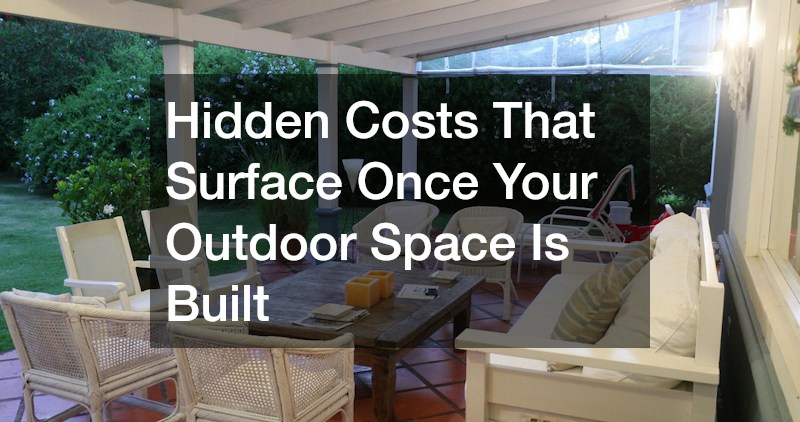
Building a deck, patio, or outdoor living area is exciting, but the finished project rarely marks the end of your spending. Once the furniture is arranged and the string lights are up, a new set of maintenance realities starts to surface, many of which homeowners never budgeted for. From drainage problems to pest activity to strain on your home’s existing systems, an outdoor renovation often reveals issues that were easy to ignore before. Knowing what to expect ahead of time can help you plan financially and avoid unpleasant surprises down the road.
Drainage Problems That Show Up After Construction
Adding a patio, deck, or hardscaped area changes how water moves across your property, and that shift often becomes obvious only after the first heavy rain. Water that used to soak into open soil may now run toward your foundation, pool near walkways, or collect against your home’s siding. This redirected runoff can quietly damage areas you never expected to worry about, including your porch structure. Left unaddressed, moisture buildup around support posts and flooring boards can lead to costly porch repair down the line.
Regrading the yard or installing additional drainage channels after the fact is far more expensive than planning for it during the original build. Homeowners are often caught off guard by how much water a new patio or deck redirects toward the house.
Increased Pest Activity Near New Structures

New decks, patios, and garden beds create shaded, moist environments that many insects and small animals find appealing. Wood decking in particular can attract termites, carpenter ants, and other wood-boring pests, especially if the lumber sits close to soil or holds moisture. Homeowners frequently notice new activity within the first year or two after construction, once pests discover the fresh food and shelter source. Scheduling regular visits from pest control services can catch early infestations before they spread into the home itself.
- Check under deck boards and around post bases for signs of tunneling or sawdust-like debris
- Keep mulch and soil at least six inches away from wood structures
- Watch for ant trails or wood that sounds hollow when tapped
- Address standing water near the structure quickly, since it attracts mosquitoes and other pests
Added Strain on Your Home’s Heating and Cooling Systems
An outdoor kitchen, sunroom, or covered patio connected to your home can change how your HVAC system performs, particularly if the addition alters airflow or insulation around the main house. Enclosing a patio or extending a roofline can block vents, shade windows that once helped warm a room naturally, or add square footage that your existing ductwork was never sized to handle. Even a well-built addition can shift the thermal balance of the rooms next to it. Homeowners sometimes notice rooms near the new structure feel warmer or cooler than others, sometimes by five degrees or more, prompting a call to AC companies to investigate whether the system needs rebalancing. A technician may need to adjust dampers, reroute a duct run, or recommend a supplemental unit if the new layout created a zone the original system can’t reach efficiently. In colder climates, a similar issue can affect indoor comfort during winter months. Drafts introduced by a new doorway or window, or heat loss through an under-insulated addition, can leave adjoining rooms noticeably chillier. This often leads homeowners to reach out to a heating company to check whether ductwork, insulation, or thermostat zones need adjustment. These are not always defects in the original system, but rather a byproduct of changing the structure and airflow around your home. Budgeting a few hundred dollars for a post-construction HVAC evaluation can catch these issues early, before uneven temperatures turn into a much larger energy bill.
New patios, sunrooms, and outdoor kitchens often change how sunlight, shade, and airflow interact with your house, and your HVAC system quietly absorbs the difference. A dark stone patio next to south-facing windows can raise indoor temperatures a few extra degrees on summer afternoons, while an enclosed sunroom added onto central ductwork sometimes pulls conditioned air away from the rest of the house. Over months, that translates into longer run times, more frequent cycling, and faster wear on components that weren’t sized for the added load. It helps to have your system inspected shortly after any major exterior addition is completed, rather than waiting for a noticeable spike in energy bills. A technician can check refrigerant levels, airflow balance, and duct pressure to see whether the addition is pulling the system outside its normal operating range. This is also a good time to ask whether a zoning adjustment, an extra return vent, or a programmable thermostat setting could offset the new demand. Catching small inefficiencies early is almost always cheaper than fixing them after a full season of strain. A minor airflow imbalance might cost a couple hundred dollars to correct, but an undersized system pushed too hard for months can shorten compressor life and lead to a premature replacement costing several thousand dollars.
Sewer and Septic Complications From Yard Work

Digging, grading, or adding heavy structures like hot tubs and stone patios can put pressure on underground pipes that were never designed to bear that kind of load. Most residential sewer lines sit only 18 to 30 inches below the surface, which means even modest excavation work or the weight of compacted fill can stress pipes that seemed perfectly stable before construction began. Older homes are especially vulnerable, since original sewer lines may already be fragile from age or tree root intrusion, particularly if they’re made of clay or cast iron rather than modern PVC. If construction crews accidentally shift soil around these lines, homeowners sometimes end up needing sewer cleaning sooner than expected due to new blockages or slowed drainage. Compacted soil from equipment traffic can also cause pipes to settle unevenly, creating low spots where waste and debris collect over time. In some cases, a hairline crack that existed for years suddenly worsens once new weight or vibration is introduced nearby. Warning signs include gurgling drains, slow-draining tubs, or unpleasant odors near the yard, but homeowners should also watch for soggy patches of grass, sinkholes, or a sudden increase in pests like flies near the affected area. A camera inspection before and after major landscaping work can help pinpoint whether existing damage predates construction or resulted from it. Catching these issues early often means the difference between a routine sewer cleaning and a full pipe replacement costing several thousand dollars.
Homes on septic systems face a related but distinct challenge. Heavy equipment or new structures placed too close to a septic tank or drain field can compact the soil and interfere with normal operation, sometimes making septic pumping necessary earlier than the usual maintenance schedule. Compacted soil reduces the drain field’s ability to absorb and filter wastewater, which can lead to slow drains, soggy patches in the yard, or backups inside the home. The risks aren’t limited to compaction alone. Tree roots from newly planted landscaping can infiltrate pipes over time, patios and decks built directly over a drain field can trap heat and moisture that disrupt the natural breakdown of waste, and retaining walls or grading changes can redirect water flow onto the tank’s access points, making future inspections more difficult. As a rule of thumb, most experts recommend keeping heavy machinery and permanent structures at least 10 to 20 feet away from the tank and drain field, though exact setback requirements vary by state and soil type. It is worth mapping out your septic system’s exact location, including the tank lid, distribution box, and drain field boundaries, before any excavation begins, so crews can avoid the area entirely and you can avoid costly repairs down the line.
Roof and Gutter Stress From Attached Structures
Covered patios, pergolas, and sunrooms are often attached directly to the existing roofline, and this connection point can become a weak spot over time. Improper flashing or a mismatched pitch between the new structure and the original roof can allow water to seep in during storms. Homeowners sometimes do not notice this until a stain appears on an interior ceiling, at which point the damage has already spread into the attic space. In more serious cases, the added stress and water exposure can shorten the lifespan of the roof enough that full roof replacement becomes necessary years earlier than planned.
Regular gutter inspections become even more important once a new structure is tied into the roofline, since additional runoff needs somewhere to go. Extending gutters or adding a diverter can prevent water from concentrating in one weak area.
Garage Access Issues Tied to New Outdoor Layouts

Homeowners often reconfigure driveways, walkways, or fencing as part of a larger outdoor renovation, and these changes can unexpectedly affect garage door function. A shifted driveway grade or new landscaping can alter how much the door is used or how it settles on its track, and increased use during a busy construction period can wear down springs faster than normal. It is not uncommon for homeowners to need garage door spring replacement within the first year or two after a major exterior project, particularly if the door was older to begin with. A door that suddenly feels heavier to lift or makes a popping sound is usually signaling spring wear.
- Listen for grinding or snapping sounds when opening or closing the door
- Watch for uneven movement, where one side lifts faster than the other
- Avoid manually forcing a stuck door, since this can worsen spring damage
- Have the door balance tested if it was used heavily during construction
Window Performance Changes After Exterior Renovations
Adding a deck, patio cover, or outdoor structure near existing windows can change how much sunlight, humidity, and airflow reach them. Older windows that seemed fine before construction sometimes reveal fogging, drafts, or sticking frames once shade patterns or moisture levels shift nearby. A roof overhang that cuts direct sun by even a few hours a day can lower the surface temperature of glass enough to encourage condensation, especially in humid climates or during seasonal swings. This is especially common when a new structure blocks airflow that previously helped keep window seals dry. Homeowners often notice the change first in double-hung or casement windows near the new structure, where trapped moisture accelerates seal breakdown and wood rot around the frame. Screened porches and solid patio covers tend to cause more noticeable shifts than open pergolas, simply because they restrict airflow more completely. Left unaddressed, these issues can compound quickly. A single failed seal might cost a few hundred dollars to repair, but once fogging appears between panes, the insulating gas has typically already escaped, and repairs rarely restore full performance. In some cases, homeowners find that the most cost-effective fix is replacement windows rather than repeated repairs to failing seals. Budgeting for two or three replacement windows near the new structure, rather than patching each one as it fails, often ends up being the more economical path over a five- to ten-year horizon.
New patios, decks, and pergolas often change how sunlight, shade, and moisture interact with nearby windows, and those effects don’t always show up right away. A patio cover that shades a window for most of the day can trap humidity against the glass and frame, while a new deck built close to the house can direct rainwater runoff toward a sill that never used to get wet. It is worth inspecting nearby windows a few months after construction wraps up, rather than waiting for a full season change to reveal problems. Look for early warning signs like condensation between panes, a musty smell near the frame, or paint that has started to bubble or peel. Run a hand along the bottom of the sill to check for softness, which can indicate water is already seeping into the wood. If the new structure sits within a few feet of a window, check whether caulking or weatherstripping has pulled away, since shifting soil or a newly poured footing can put subtle stress on the surrounding wall. Small adjustments early on, like resealing a frame or adding a drip edge to redirect water away from the sill, are far less expensive than replacing a window that has suffered ongoing moisture damage. A resealing job might run $150 to $300, while a full window replacement due to rot can easily climb past $1,000 once labor and materials are factored in. Catching the issue within the first few months, rather than after a winter of freeze-thaw cycles, is what makes the difference between a quick fix and a major repair.
Soil Settling and Its Effect on Walkways and Patios

Freshly disturbed soil takes time to settle, even when a contractor compacts it properly during construction. Over the following year, homeowners often notice cracks, uneven pavers, or small dips forming in walkways and patio surfaces. This is a normal part of the settling process, but ignoring it can lead to tripping hazards or water pooling in low spots. Addressing minor settling early, such as adding fill material or resetting a few pavers, prevents the need for a larger repair later.
- Check for gaps between pavers or slabs every few months during the first year
- Fill small cracks promptly to prevent water infiltration
- Watch for pooling water after rain, which signals uneven settling
- Reset shifted stones before they become a fall hazard
An outdoor space rarely stays contained to the yard alone, since its effects ripple into your home’s drainage, structure, and mechanical systems in ways that only become clear over time. Building a small maintenance fund and scheduling a few follow-up inspections during the first year can help you catch these hidden costs before they grow into bigger repairs. Staying attentive now means you get to enjoy your new outdoor space with far fewer surprises later.